Summary: ◀▼
You can view, create, organize, rename, and delete root causes used in review scorecards to capture why a rating was given, especially for negative feedback. Using tiers and sub-tiers helps you sort root causes, search and filter them faster, and analyze review trends to guide coaching and fix common issues.
Root causes prompt reviewers to provide more details about their feedback for a category. This is particularly helpful for negative feedback. For example, if a reviewer gives a negative rating for tone, they can specify the reasons using predefined choices or by using a free-form comment.
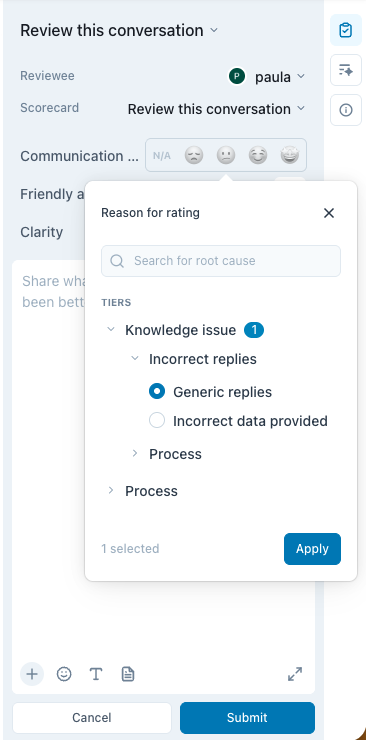
Root causes can be created during scorecard creation or on the Root causes page.
Use dashboards to analyze root causes and understand the underlying issues that affect customer interactions at both the team and agent levels. This helps enable targeted coaching and issue resolution.
This article contains the following topics:
- Accessing root causes
- Creating root causes
- Organizing root causes using tiers and sub-tiers
- Renaming root causes, tiers and sub-tiers
- Deleting root causes, tiers and sub-tiers
Related articles
Accessing root causes
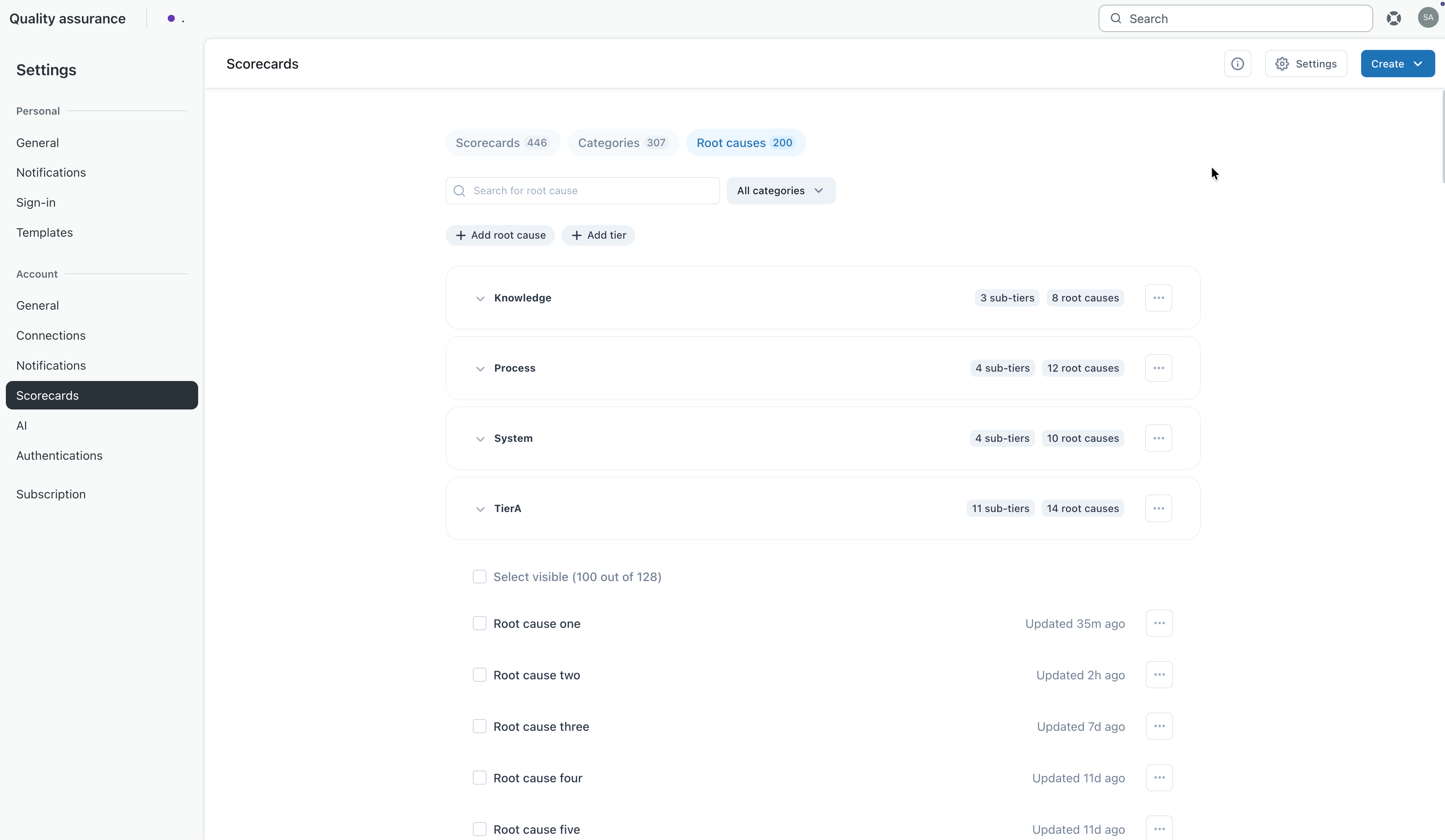
From the Root causes page, you can view each tier, sub-tier, and individual root cause's name. The list also indicates when each root cause was last updated.
You can use the search field at the top of the list to find a root cause by name, or filter the list to show only root causes assigned to a specific category. You can also organize root causes using tiers and sub-tiers. This structure streamlines workflows and helps your team quickly find and choose the right root causes.
You must be an admin to view and manage root causes.
To access your root causes
- In Quality assurance, click your profile icon in the top-right corner.
- Click Settings.
- In the sidebar under Account, click Scorecards.
- Click Root causes at the top to display a list of all your root
causes, tiers and sub-tiers.
Creating root causes
Root causes can be created during scorecard creation or on the Root causes page.
To create a new root cause
- Access your root causes.
- Click + Add root cause.
- Enter a name for the root cause.
- (Optional) Select a tier and sub-tier.
- Click Save.
Organizing root causes using tiers and sub-tiers
Organizing root causes into tiers and sub-tiers helps your team find and select the right root causes more easily. Use tiers to group and structure your root causes. Within tiers, you can also add standalone root causes and sub-tiers. You can structure your reasoning by starting from the high-level tier and digging deeper into the specifics.
When creating scorecards, you can add multiple root causes at once by specifying a tier name.
Specifically you can:
Creating root cause tiers
Use tiers to group and structure your root causes.
To create a root cause tier
- Access your root causes.
- Click + Add tier.
- Enter the root cause tier name.
- Click Save changes.
Creating root cause sub-tiers
Within tiers, you can also add sub-tiers.
To create a root cause sub-tier
- Access your root causes.
- Next to the tier name, click the options menu (
 ) and select Add sub-tier.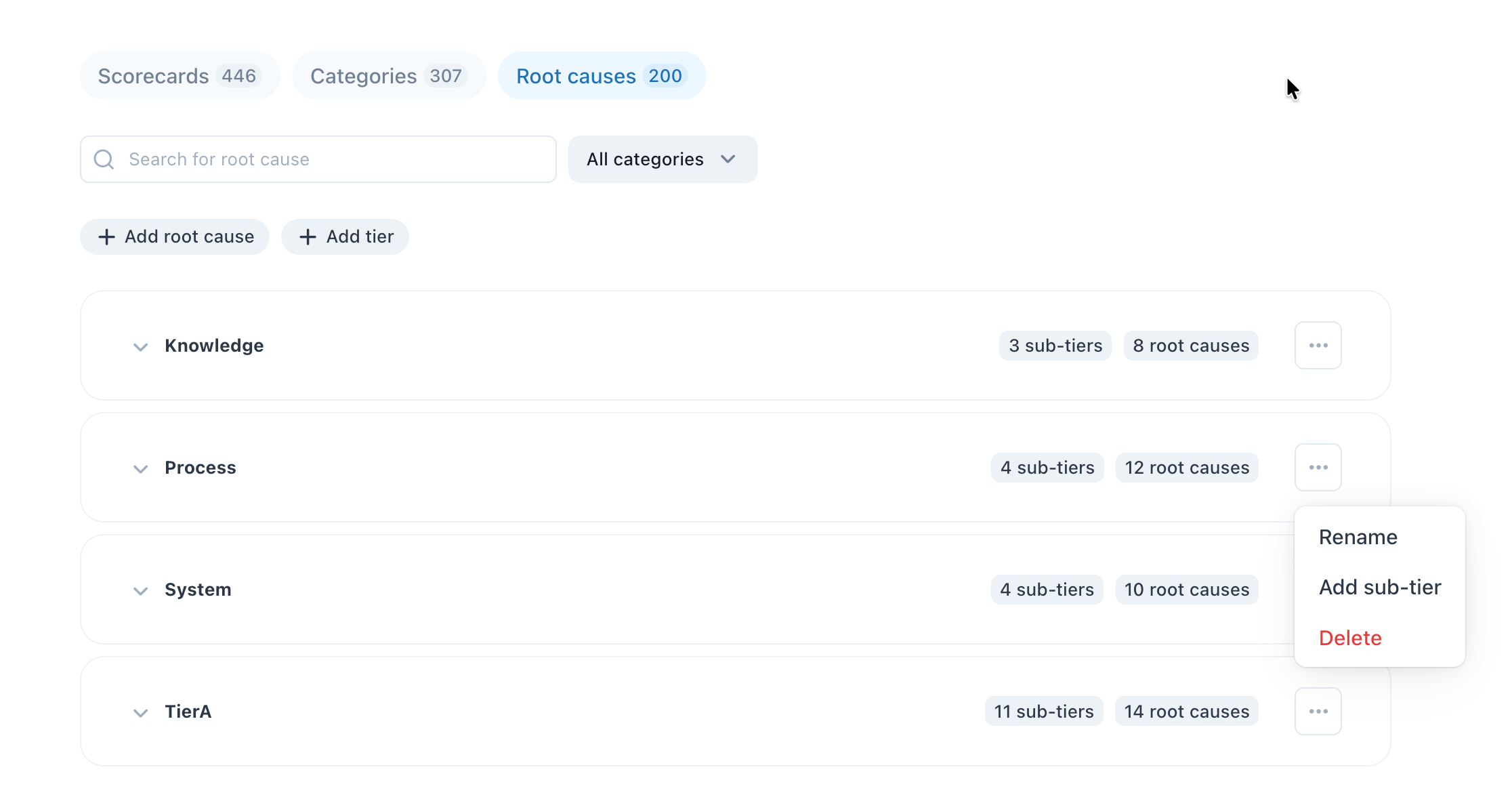
- Enter the sub-tier name.
- Click Save changes.
Moving root causes into and out of tiers and sub-tiers
You can move root causes into and out of tiers and sub-tiers at any time.
To move root causes into or out of tiers and sub-tiers
- Access your root causes.
- Select the root causes you want to move into or out of a tier or sub-tier.
- In the toolbar that appears at the bottom of the page, click Move root
causes.
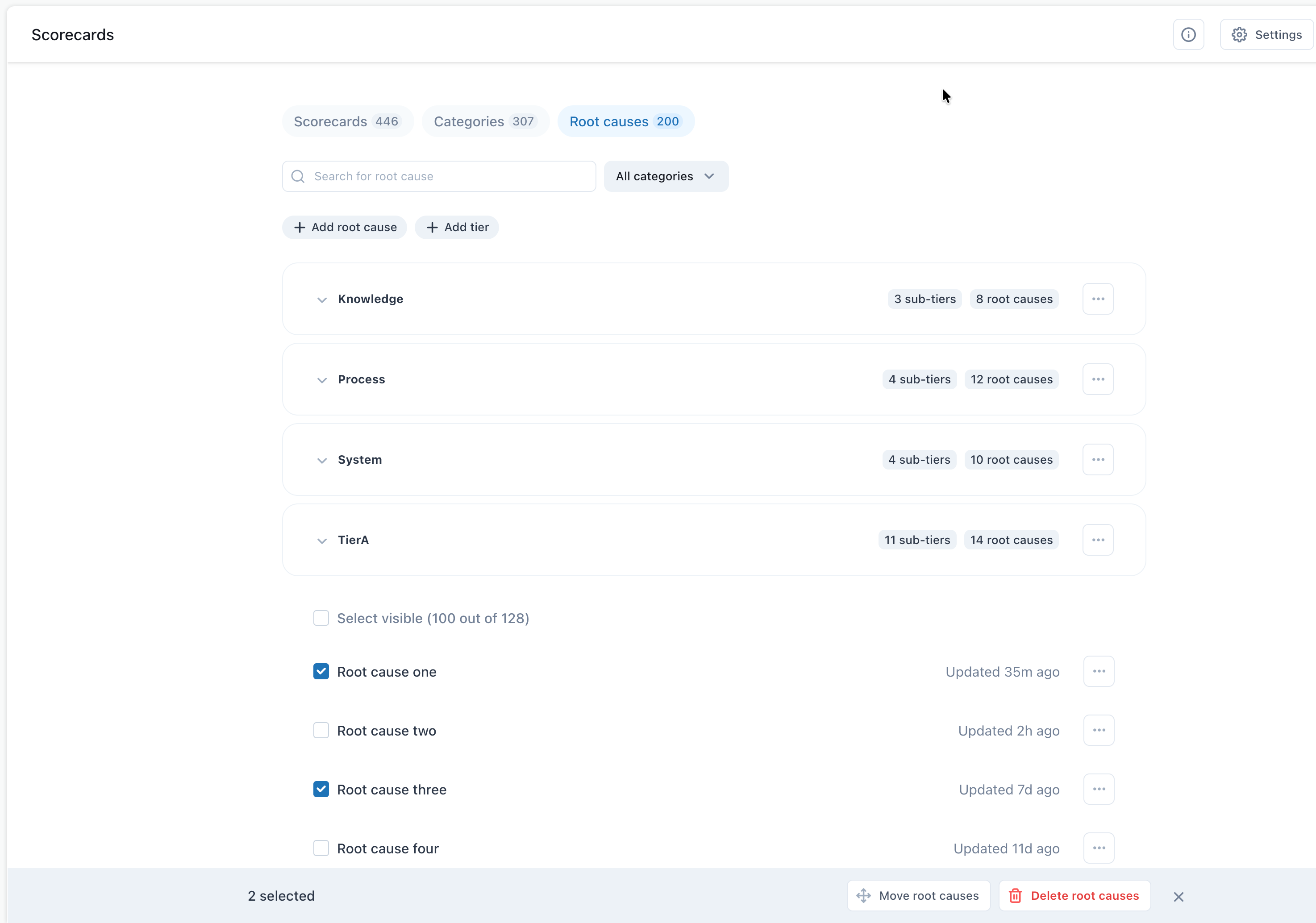
- Under Move to, select the tier and sub-tier you want to move the root causes to, or select Loose root causes list to move the root causes out of their current tier or sub-tier.
- Click Save changes.
Renaming root causes, tiers and sub-tiers
Updates to a root cause’s name apply to all categories that include the root cause and affect the evaluation of future conversations. This will also be reflected in the Reviews dashboard as if a new root cause had been created.
To rename a root cause
- Access your root causes.
- Next to the root cause, tier or sub-tier name, click the options menu () and select Rename.
- Enter a new root cause, tier, or sub-tier name.
- Click Save changes.
Deleting root causes, tiers and sub-tiers
Deleting root causes, tiers and sub-tiers is permanent. This action removes the root cause from all categories and erases all associated data from reports.
To delete root causes
- Access your root causes.
- Select the root causes you want to delete.
- In the toolbar at the bottom of the page, click Delete
root causes.
- Click Delete root causes to confirm the deletion.
To delete a root cause tier or sub-tier
- Access your root causes.
- Next to the tier or sub-tier you want to remove, click the options menu () and select Delete.
If the tier includes empty sub-tiers, these are also deleted.
If the tier or sub-tier includes root causes, you’ll be asked to choose whether to delete the tier or sub-tier but keep its root causes or delete the tier or sub-tier and its root causes.
If you choose to keep the root causes, all root causes in the tier and its sub-tiers will be kept and listed as loose root causes.
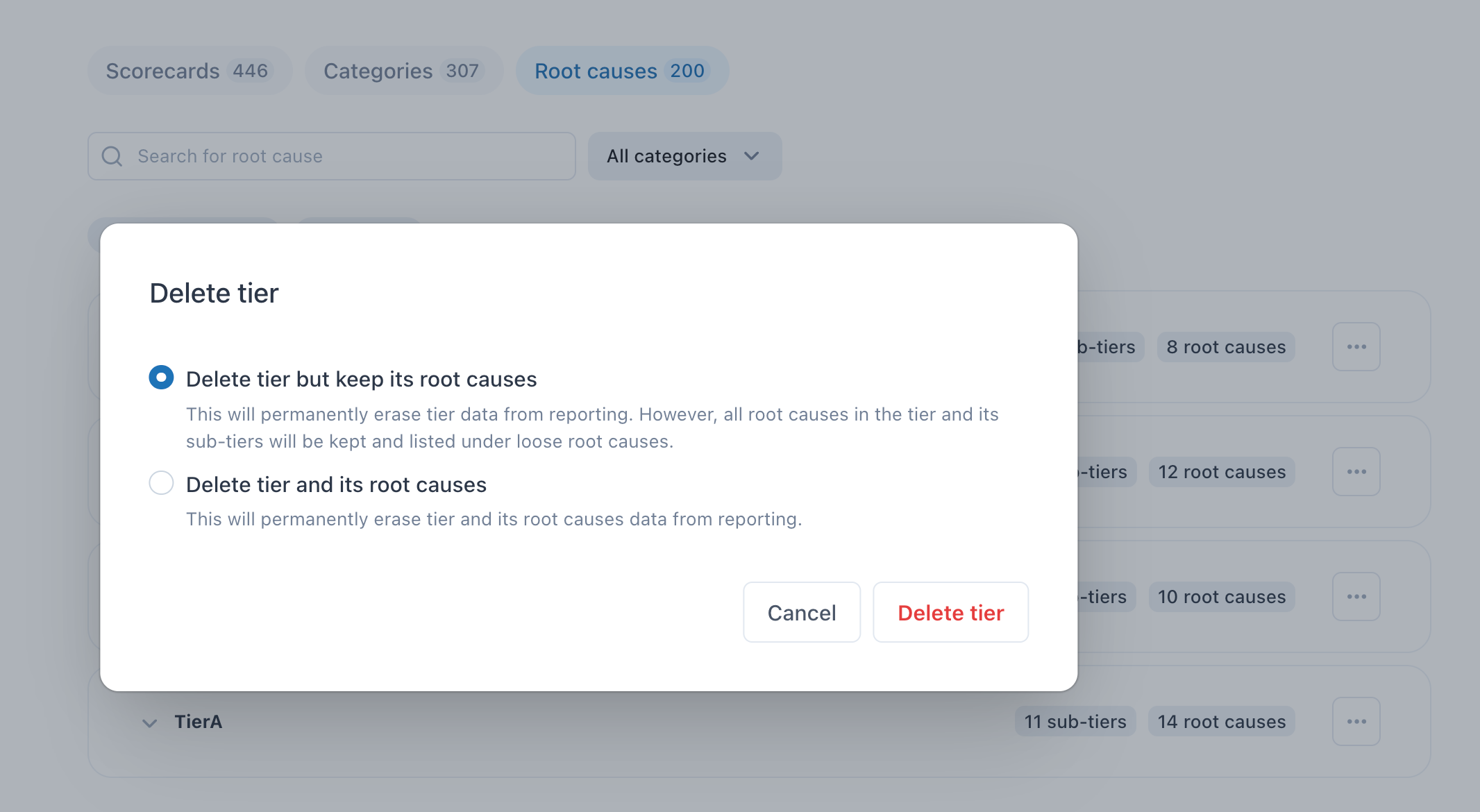
- Click Delete tier or Delete sub-tier.