This article describes how to use tabs to help manage conversations in Zendesk agent interfaces. Some channel types shown in this article may not be available in your account, depending on which channels your administrator has configured.
This article contains these sections:
About ticket tabs
As a busy agent using the Zendesk Agent Workspace, you may have to manage multiple conversations at the same time. You can use tabs at the top of the interface to help you move easily between many types of conversations (chats, phone, email, and messages). Tabs provide important information and help you see which conversations are still active and which conversations are waiting for your reply.

To help you manage your conversations, the tabs provide you with useful information to keep you on track with your customers.
Tabs can include:
- Highlighting to show the ticket you’re actively working on.
- Icons to show the conversation type. For example, email, chat, phone, or message application.
- For messaging conversations and active chats:
- Requester name
- Last message and typing indicator
- For all other conversations and for ended chats:
- Ticket subject
- Ticket ID
- Indicators to show auto assist updates (Copilot add-on).
Last message is the first line of the last successful reply between the agent assigned to the ticket and the requester.
Here are a few examples:
| Tab | Description | Channel |
|---|---|---|
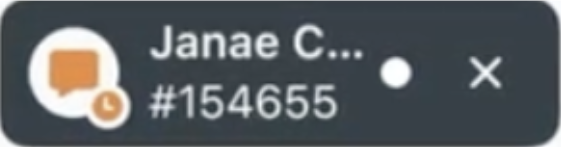 |
Highlighted tab. Shows the ticket you’re currently working on. | Any channel. |
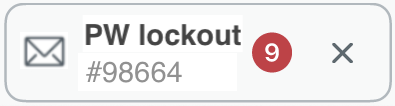 |
New message (red dot) | Any channel type, except phone. |
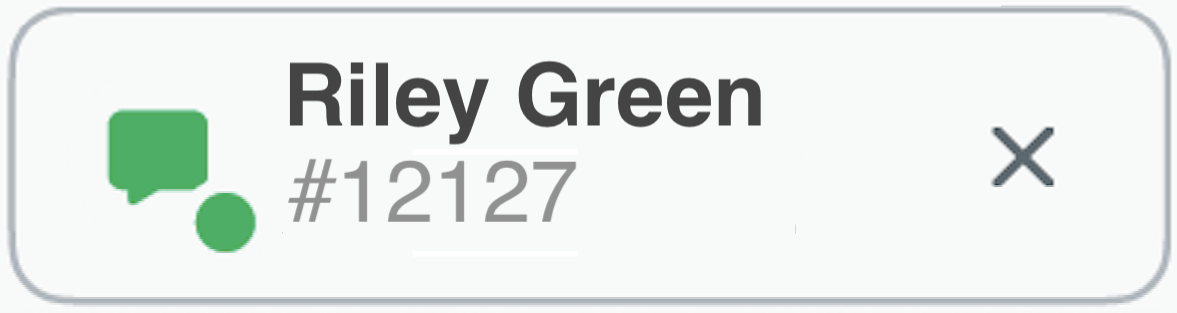 |
Conversation is active (green dot) | Any channel type, except email, API, help center, and channel framework. |
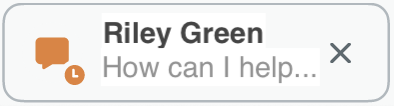 |
Conversation is inactive or the agent is away (yellow icon) | Works for chats, but not messaging, email, API, help center, and channel framework. |
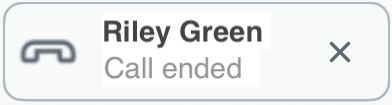 |
Conversation (or call) has ended (no color) | Any channel type. For messaging conversations, the no-color icon indicates the call has ended or become inactivate. |
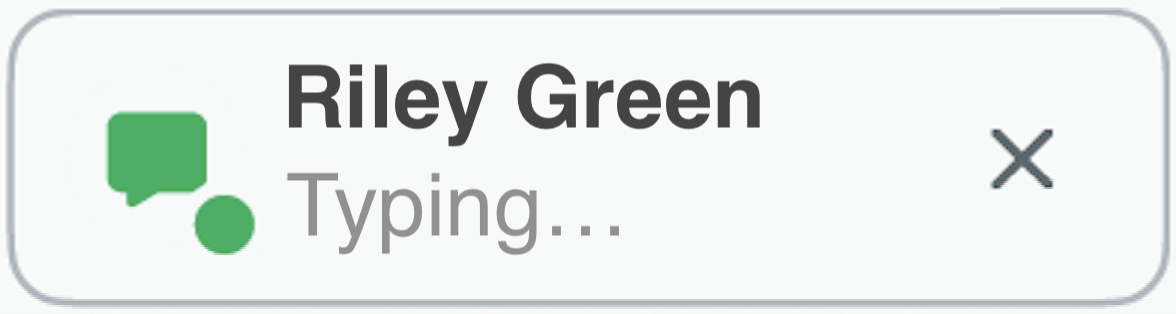 |
User is typing | Any channel type, except phone, email, API, help center, and channel framework. |
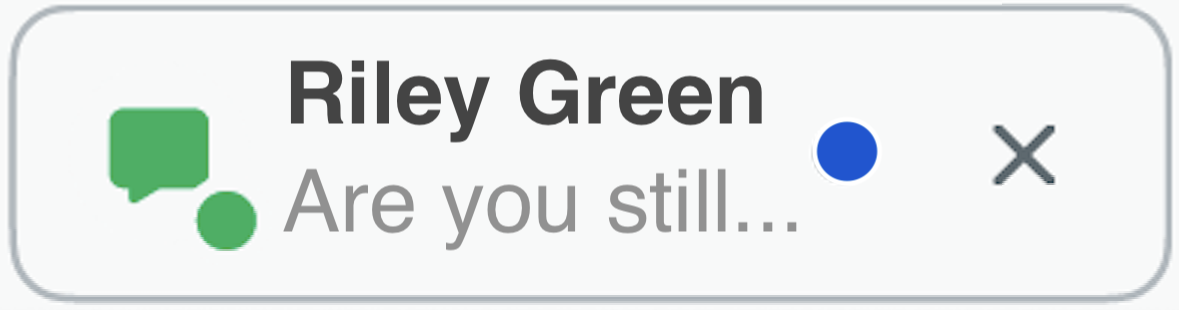 |
Unsaved changes in the ticket (blue dot) | Any channel type. |
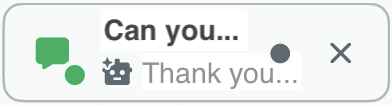 |
Includes a message or suggestion from auto assist | Email and messaging channels (Copilot) |
Other benefits of tabs include:
- Because phone conversations and live chats typically require the most immediate responses, tabs for these types of conversations automatically move to the right side of the interface, so they don’t get overlooked when you’re working on multiple conversations.
- Channels that have “live” conversations, such as chats, phone calls, or messages, show when a conversation is active, inactive, or ended. A conversation is inactive if no messages have been sent or received after a certain period of time. For example, ten minutes for social messages.
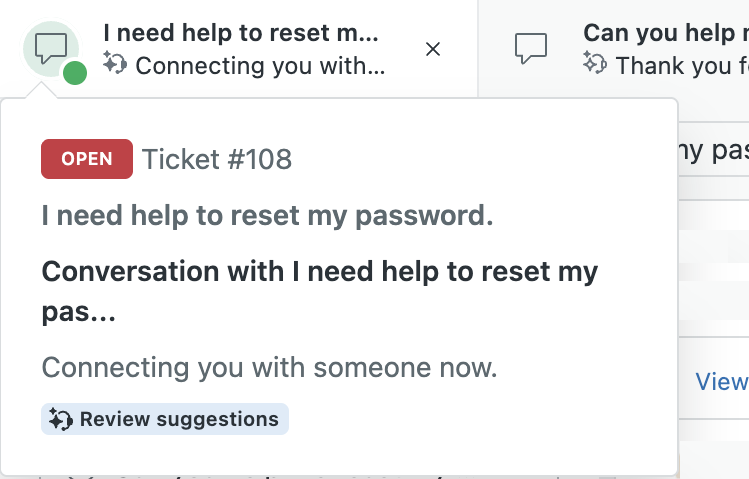
- To see conversation details, hold your mouse pointer over a tab.

- If you’re using auto assist, the conversation details include auto assist
information.
Reordering tabs
To help you manage conversations in the ticket interface, you can reorder the ticket tabs using drag-and-drop. For example, you might want to move ticket tabs from important customers to the left so you can easily access and respond to them.
To reorder ticket tabs
- Click the tab you want to move.
- Hold down the mouse button and drag the tab across the top ticket bar to a new location in the tab order.
- Release the mouse button.
- You can continue to drag-and-drop the tabs until they are in the order you’d like.
Viewing ticket overflow
When you have a large number of tickets open that don’t fit across the top ticket bar, you’ll see new ticket tabs open in an overflow options menu. You can use this menu to access open tickets or perform other tasks. By adding open ticket tabs into the options menu, it prevents the width of the ticket tabs from compressing and making the tabs unreadable. Tickets in the overflow menu can be moved to any tab position using drag-and-drop as well.
To view the ticket tab overflow
- Click the options menu icon (
 ) in the top bar.
 A list of additional tabs you have open appears.
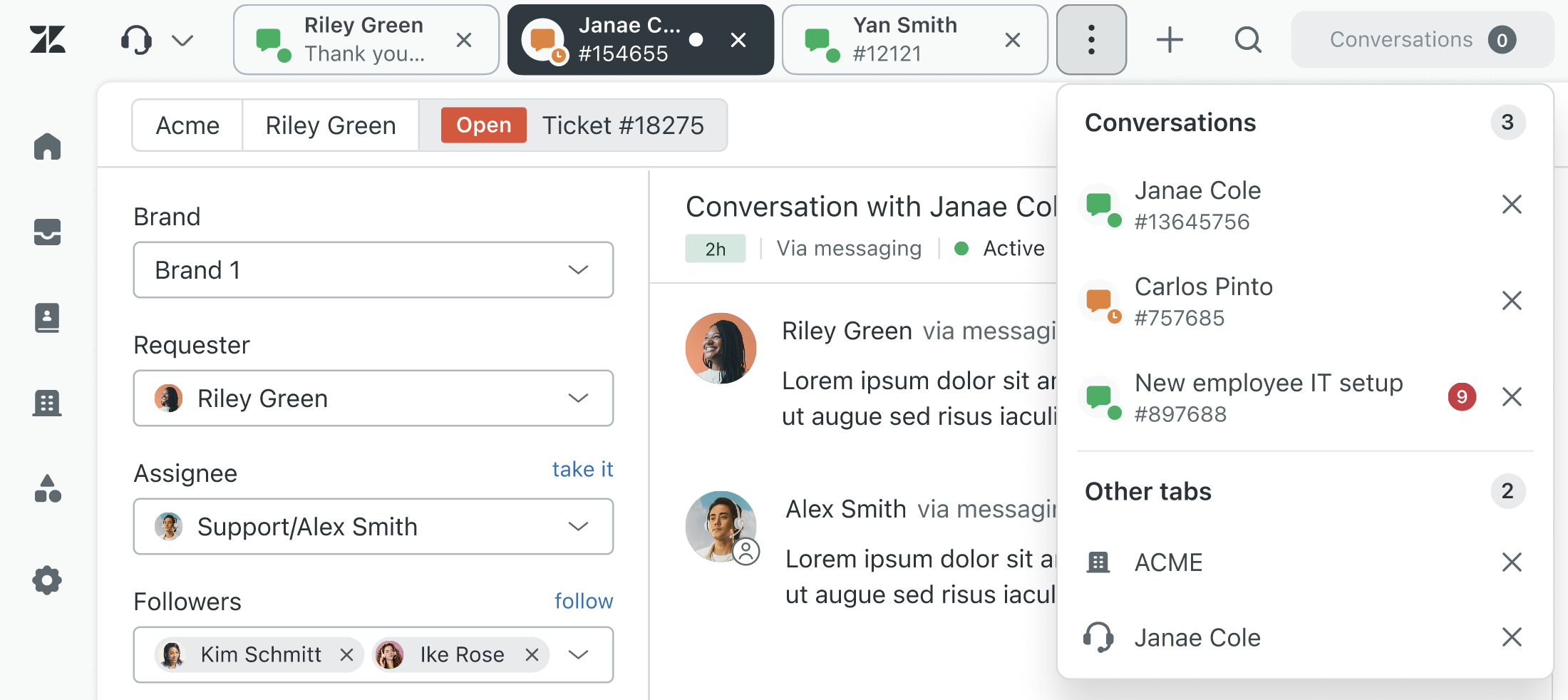
Use this menu to select tickets or other types of tabs you have open. For example, end-user profiles.